

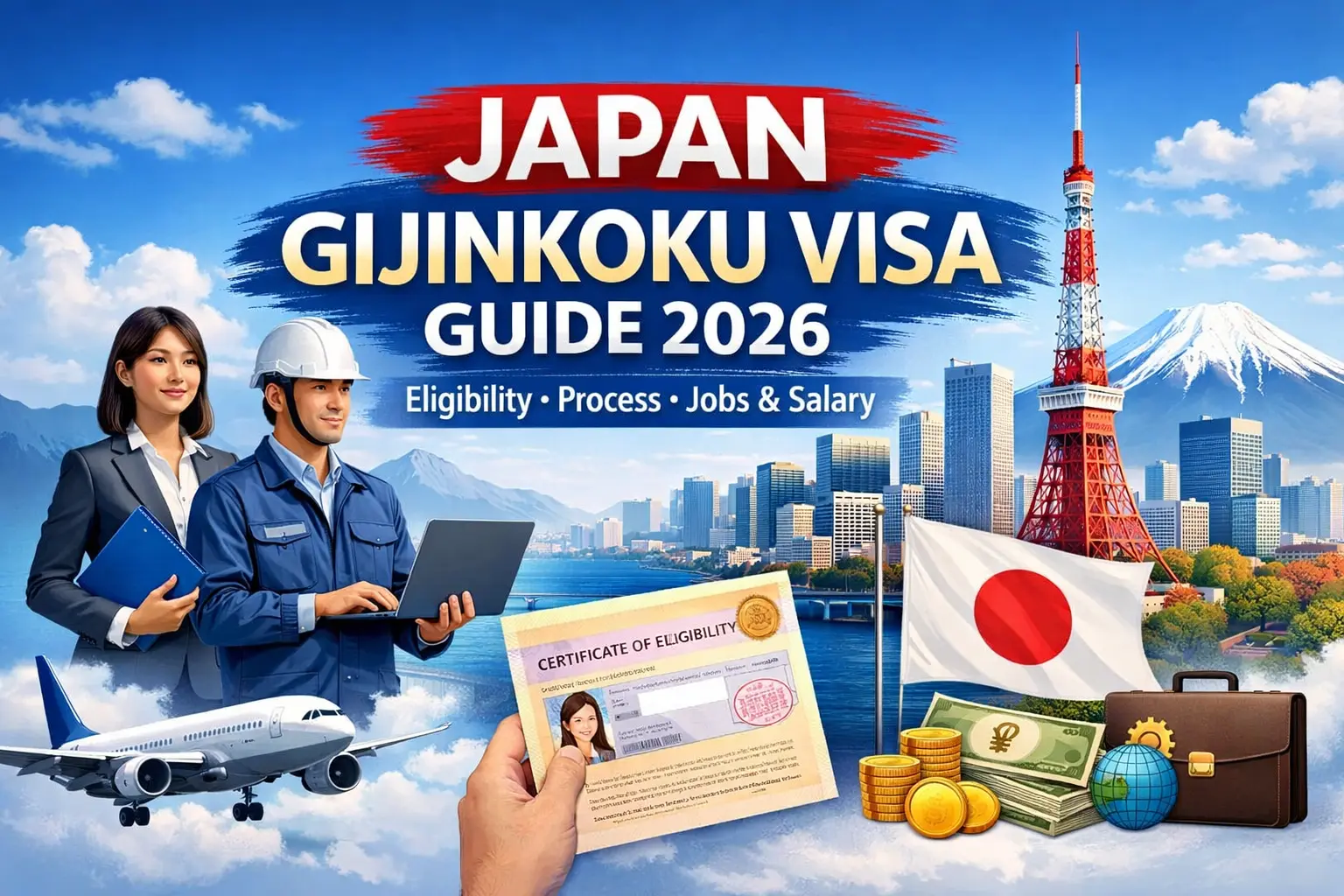
Japan continues to be one of the top destinations for skilled foreign professionals, and the Japan Gijinkoku Visa (Engineer / Specialist in Humanities / International Services) remains the most popular work visa for professionals in 2026.
This guide explains who can apply, job opportunities, salary expectations, and the complete application process for the Japan Gijinkoku Visa.
What Is the Japan Gijinkoku Visa?
The Japan Gijinkoku Visa (技術・人文知識・国際業務) is a Japanese work visa designed for foreign professionals with specialized skills, academic knowledge, or international expertise, as defined by the Immigration Services Agency of Japan.
It allows qualified individuals to work legally in Japan in professional roles such as engineering, IT, business, finance, translation, and international services.
This visa is widely used by engineers, IT professionals, accountants, business analysts, and international trade specialists.
Japan Gijinkoku Visa Categories
The Gijinkoku visa covers three major professional fields:
1. Engineer (技術 – Gijutsu)
- Software & IT engineers
- Mechanical, electrical, and civil engineers
- Network & system engineers
- Automotive & manufacturing engineers
2. Specialist in Humanities (人文知識 – Jinbun Chishiki)
- Business analysts
- Accountants & auditors
- Marketing & sales professionals
- HR & administrative professionals
3. International Services (国際業務 – Kokusai Gyomu)
- Translators & interpreters
- International marketing specialists
- Trade & import/export coordinators
- Foreign language instructors (non-school level)
Japan Gijinkoku Visa Eligibility Requirements (2026)
To qualify for the Japan Gijinkoku visa in 2026, applicants must meet the following conditions:
Educational Qualification
You must have one of the following:
- Bachelor’s degree or higher in a relevant field, OR
- Japanese vocational college diploma (専門学校), OR
- 10+ years of documented work experience (3+ years for some international service roles)
Important: Your education and work must match the job role.
Employment Requirements
Valid job offer from a registered Japanese company
Employment contract with salary, position, and duties
Salary must be equal to or higher than that of Japanese workers in similar roles
Job duties must match your educational background
Gijinkoku Visa Application Process (Step-by-Step)
Step 1: Secure a Job Offer
You must first receive a job offer from a Japanese employer willing to sponsor your visa.
Step 2: Certificate of Eligibility (COE)
The employer applies for the COE at the Japanese Immigration Office.
Processing time: 1–3 months
Step 3: Visa Application
Once the COE is issued, you apply for the visa at the Japanese Embassy or Consulate in your country.
Processing time: 5–10 working days
Step 4: Travel to Japan
After visa approval, you can enter Japan and begin employment.
Gijinkoku Visa Jobs in Demand (2026)
Japan faces a shortage of skilled professionals, especially in:
- Software development & IT
- Engineering & manufacturing
- Finance & accounting
- International trade & logistics
- Business consulting & management
- Design & UI/UX
IT and engineering roles continue to dominate Gijinkoku visa approvals in 2026.
Gijinkoku Visa Salary in Japan (2026)
Average Annual Salary
- Entry Level: ¥3,000,000 – ¥4,500,000
- Mid-Level: ¥4,500,000 – ¥6,500,000
- Senior Level: ¥6,500,000 – ¥10,000,000+
Salaries vary depending on:
- Industry
- Experience
- Location
- Company size
- Japanese language ability
Gijinkoku Visa Duration & Renewal
- Initial visa: 1 or 3 years
- Renewable up to 5 years
- Can lead to Permanent Residency (PR)
Highly Skilled Professionals may qualify for fast-track PR in 1–3 years.
Can You Bring Family on Gijinkoku Visa?
Yes ✅
You can bring:
- Spouse
- Children
Your spouse can work part-time or full-time with proper permission.
Japanese Language Requirement
- Not mandatory for all jobs
- IT roles may accept English
- JLPT N2 or higher greatly improves job opportunities, salary, and promotion chances
Advantages of Gijinkoku Visa
- Legal professional employment in Japan
- Competitive salary & benefits
- Family visa eligibility
- Pathway to permanent residency
- International work experience
- Long-term career growth
Final Thoughts
The Japan Gijinkoku Visa in 2026 offers one of the best pathways for skilled professionals to build a stable, well-paid career in Japan. With the right qualifications, job offer, and proper guidance, professionals can successfully live and work in Japan long-term.
If you are planning to apply for the Gijinkoku visa, professional support can significantly improve your success rate and reduce delays.
Japan Gijinkoku Visa FAQ (2026)
What is a Gijinkoku Visa?
The Gijinkoku Visa (技術・人文知識・国際業務), also known as the Engineer/Specialist in Humanities/International Services visa, is a professional work visa for foreign nationals seeking employment in Japan. It is designed for individuals with specialized skills or expertise in fields such as engineering, IT, business, finance, marketing, translation, or international trade.
To qualify, applicants must meet one of the following criteria:
- A bachelor’s degree or higher in a relevant field,
- A Japanese vocational school diploma (専門学校) with a relevant qualification, or
- 10+ years of professional experience in the relevant industry.
This visa not only allows skilled professionals to work legally in Japan but also provides opportunities for career growth, competitive salaries, family inclusion, and a pathway to permanent residency. It is one of the most widely used employment visas for international talent in Japan.
Who is Eligible for a Gijinkoku Visa?
The Gijinkoku Visa (Engineer/Specialist in Humanities/International Services) is designed for skilled foreign professionals seeking employment in Japan. It targets individuals with specialized knowledge or expertise in fields such as:
- Engineering & IT: Software developers, system engineers, network specialists, mechanical or electrical engineers
- Business & Marketing: Accountants, auditors, project managers, marketing and sales professionals
- International Services: Translators, interpreters, international trade coordinators, foreign language instructors
To qualify for this visa, applicants must meet one of the following criteria:
- Educational Qualification:
- Bachelor’s degree or higher in a field relevant to the job, OR
- Japanese vocational school diploma (専門学校) with relevant specialization
- Professional Experience:
- At least 10 years of documented work experience in the relevant field (some positions may require only 3 years)
Additionally, applicants must have a valid job offer from a registered Japanese company, with employment duties that match their education or experience.
The Gijinkoku Visa is ideal for professionals aiming to build a long-term career in Japan, earn competitive salaries, and gain international work experience.
Which Professions Qualify for the Gijinkoku Visa?
The Gijinkoku Visa (Engineer/Specialist in Humanities/International Services) is intended for skilled professionals in white-collar roles that require specialized knowledge or expertise. Japan uses this visa to attract international talent in sectors such as engineering, IT, business, finance, law, and international services.
Common professions that qualify include:
1. Engineering & IT
- Software developers & programmers
- System and network engineers
- Mechanical, electrical, and civil engineers
- IT infrastructure and cybersecurity specialists
2. Business, Finance & Management
- Accountants, auditors, and financial analysts
- Business analysts and consultants
- Marketing, sales, and operations professionals
- Human resources and administrative specialists
3. International Services & Language
- Translators and interpreters
- International trade and import/export coordinators
- Foreign language instructors (university or vocational level)
- Global business and marketing specialists
Essentially, any role that requires professional expertise, advanced knowledge, or specialized skills in line with your education or experience may qualify for a Gijinkoku Visa.
Can I Bring My Family with Me to Japan?
Yes, as a Gijinkoku visa holder, you can bring your spouse and unmarried, minor children to live with you in Japan. To do so, each dependent must obtain a dependent visa, which requires a Certificate of Eligibility (COE) issued by Japanese immigration.
Before bringing your family, you should:
- Establish your residency in Japan
- Secure suitable family accommodation
Note: Parents, siblings, or other extended family members are generally not eligible for dependent visas under the Gijinkoku category.
Bringing your family allows them to live, study, and (in some cases) work part-time in Japan, helping you settle comfortably while pursuing your professional career.
How Long Does the Gijinkoku Visa Process Take?
The Japan Gijinkoku Visa process typically takes 1 to 4 months, depending on the employer, immigration office, and completeness of documents. The process happens in two main stages:
1. Certificate of Eligibility (COE) Processing
Your Japanese employer applies for the Certificate of Eligibility (COE) on your behalf at the Immigration Services Agency of Japan.
- Processing time: 1–3 months
- This is the longest and most important stage of the process.
2. Visa Application at the Japanese Embassy
Once the COE is approved, you apply for the visa at the Japanese Embassy or Consulate in your home country.
- Processing time: 5–10 working days
Overall Timeline:
From job offer to visa issuance, the entire process usually takes approximately 4–12 weeks.
Delays may occur if documents are incomplete, the employer is new, or immigration requests additional verification.

Leave a Reply