

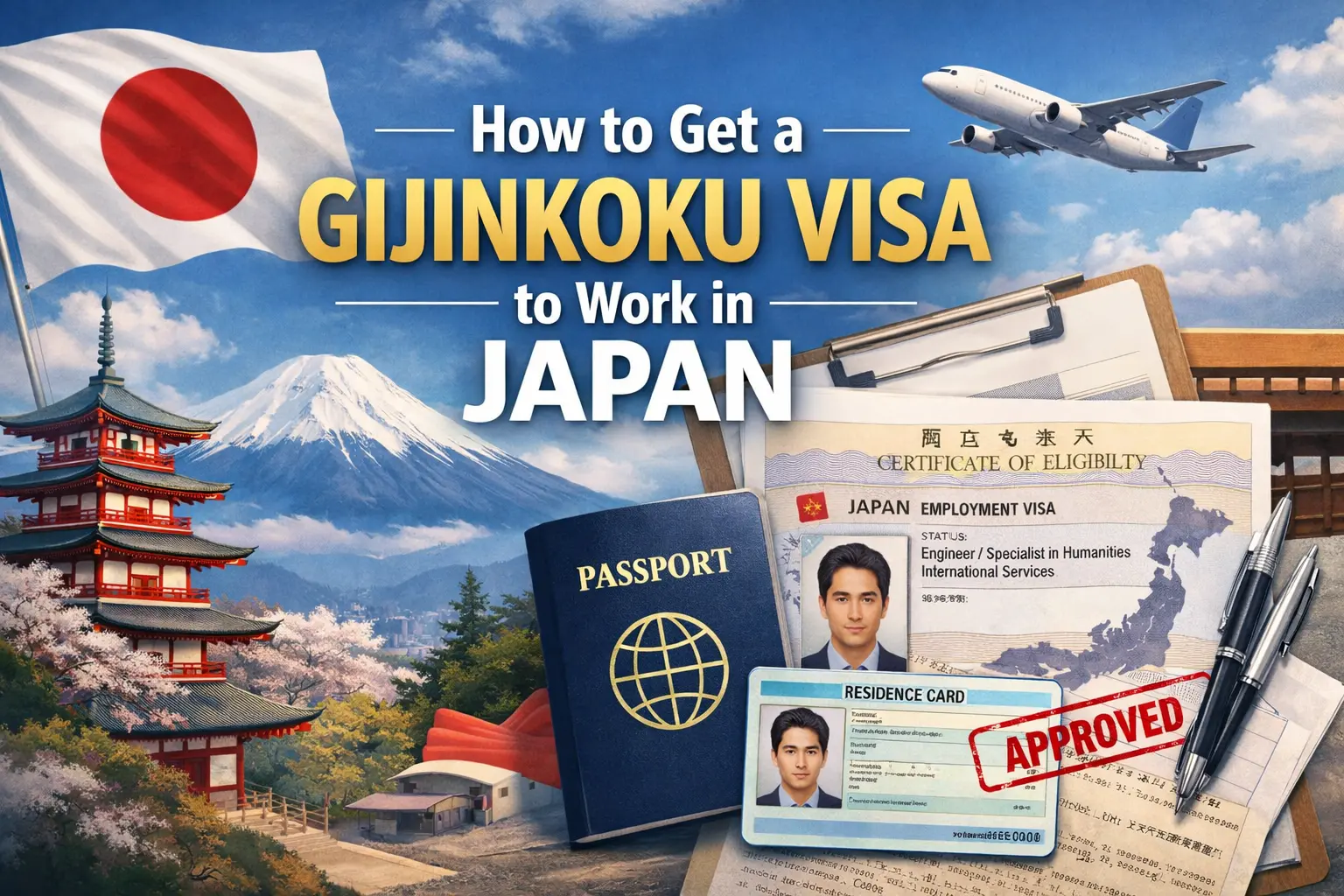
Step 1: Check Your Eligibility
Before starting the Gijinkoku Visa in Japan application process, it is important to confirm that you meet the basic eligibility requirements set by Japanese immigration authorities. Sitasmi Global Education can guide you through the process, helping ensure that you have the right documents, meet all requirements, and maximize your chances of a successful visa application.
Job Offer from a Japanese Company
To apply for a Gijinkoku Visa, you must first receive a job offer from a company based in Japan. Individuals cannot apply for this visa on their own. The Japanese employer acts as your visa sponsor and submits key documents to immigration on your behalf.
Professional or Skilled Job Category
The job offered must fall into a professional or skilled category, such as engineering, information technology, business, marketing, finance, or international services, such as translation.
Jobs involving manual labor, factory work, construction, or other unskilled roles are not eligible for this visa type.
University Degree or Relevant Work Experience
Applicants are generally required to have a university degree related to the job position. In some cases, several years of relevant professional work experience may be accepted instead of a degree. This requirement helps prove that the applicant has the specialized knowledge needed for the role.
Why Eligibility Matters
Meeting these conditions is essential. If any eligibility requirement is not met, the visa application may be rejected, even if a job offer has already been issued.
Step 2: Get a Job Offer from Japan
To apply for a Gijinkoku Visa, you must first secure a job offer from a Japanese company. This visa cannot be obtained through self-application or without employment.
You cannot Apply Independently
The Gijinkoku Visa is an employment-based visa, which means individuals cannot apply on their own. A confirmed job offer is mandatory before any visa process can begin.
A Japanese Employer Must Hire You
A company legally registered in Japan must officially hire you for a professional or skilled position. The job role must match the categories approved under the Gijinkoku Visa, such as engineering, business, or international services.
The Employer Becomes Your Visa Sponsor
Once hired, the Japanese employer acts as your visa sponsor. The company is responsible for submitting key documents to Japan’s immigration office, including the application for the Certificate of Eligibility (COE).
Why This Step Is Important
Without a Japanese employer willing to sponsor your visa, it is not possible to proceed with the Gijinkoku Visa application. Securing a valid job offer is the foundation of the entire process.
Step 3: Prepare Required Documents
After receiving a job offer, the next step is to prepare the necessary documents for the Gijinkoku Visa application. Both the applicant and the employer must submit specific paperwork to Japanese immigration authorities.
Applicant’s Documents
As the applicant, you are usually required to provide the following:
- Passport – must be valid for the duration of the visa application
- Resume / CV – showing your education and work history
- University Degree Certificate – to prove your academic qualifications
- Job Contract or Offer Letter – issued by the Japanese employer
Employer’s Documents
The Japanese employer will prepare and submit company-related documents, such as:
- Company registration details
- Financial statements
- Explanation of the job role and employment conditions
These documents confirm that the company is legally established and capable of sponsoring a foreign employee.
Step 4: Employer Applies for Certificate of Eligibility (COE)
Once all the required documents are ready, the Japanese employer applies for a Certificate of Eligibility (COE) on your behalf. The COE is one of the most important parts of the Gijinkoku Visa process.
What Is the COE?
The Certificate of Eligibility is an official document issued by Japanese immigration that confirms you meet the requirements to work in Japan. It is required before you can apply for the visa at a Japanese embassy or consulate.
Employer Submits the Application
Your employer sends the necessary documents, including both your personal documents and company documents, to the Immigration Bureau of Japan. This step officially starts the visa process.
Processing Time
The COE usually takes 1 to 3 months to be issued. Processing times can vary depending on the immigration office and the completeness of the submitted documents.
Why This Step Matters
Without a COE, you cannot apply for the Gijinkoku Visa. Even if you already have a job offer, immigration requires this certificate as proof that you are eligible to work in Japan.
Step 5: Receive the Certificate of Eligibility (COE)
After your employer submits the application, the Immigration Bureau reviews all documents. Once everything is approved, the Certificate of Eligibility (COE) is issued and sent to you.
What the COE Means
The COE is an official confirmation from the Japanese government that you meet all requirements for the Gijinkoku Visa. It proves that:
- You are eligible to work in Japan
- Your job and qualifications meet immigration standards
Next Step After Receiving COE
Once you have the COE, you can use it to apply for the actual visa at a Japanese embassy or consulate in your home country. The COE is essential — without it, the visa cannot be issued.
Important Tip
Keep the COE safe and intact. You will need to submit the original certificate along with your visa application.
Step 6: Apply for the Visa at the Japanese Embassy
After receiving the Certificate of Eligibility (COE), the next step is to apply for the Gijinkoku Visa at a Japanese embassy or consulate in your home country.
Visit the Japanese Embassy or Consulate
You must visit the Japanese embassy or consulate that has jurisdiction over your place of residence. Some embassies may require an appointment in advance.
Submit the Required Documents
When applying, you typically need to submit:
- Certificate of Eligibility (COE)
- Passport (valid
- Visa application form (completed and signed)
In some cases, the embassy may request additional documents.
Visa Processing Time
Visa processing usually takes 5 to 10 working days after submission. Processing times may vary depending on the embassy and individual circumstances.
After Approval
Once the visa is approved, it will be stamped in your passport, allowing you to travel to Japan and begin your employment.
Step 7: Receive Your Gijinkoku Visa
Once your visa application is approved by the Japanese embassy or consulate, the Gijinkoku Visa will be stamped in your passport.
Visa Issuance
The visa stamp in your passport confirms that you are legally permitted to enter Japan for work under the Engineer / Specialist in Humanities / International Services category.
Ready to Travel
After receiving the visa, you are allowed to travel to Japan within the validity period shown on the visa. This marks the final step before starting your new job and life in Japan.
Important Reminder
Make sure to carry your passport and COE when travelling, as immigration officers may request to see them upon arrival.
Step 8: Arrive in Japan and Get Your Residence Card
After traveling to Japan with your Gijinkoku Visa, the final step is completing immigration procedures upon arrival.
Receive Your Residence Card
At major Japanese airports, immigration officers will issue your Residence Card when you enter the country. This card is your official identification as a foreign resident in Japan.
Legal Permission to Live and Work
The Residence Card confirms that you are legally allowed to live and work in Japan under the Gijinkoku Visa. It includes important details such as your visa status and period of stay.
After Arrival
Once you receive your Residence Card, you must:
- Register your address at the local city or ward office
- Carry the Residence Card with you at all times while in Japan
Completion of the Visa Process
With the Residence Card issued, your Gijinkoku Visa process is complete, and you can officially begin your employment and life in Japan.
Final Notes
Visa Duration
The Gijinkoku Visa is usually issued for 1 year, 3 years, or 5 years, depending on your job, employer, and immigration assessment.
Visa Renewal
This visa is renewable as long as you continue working in an eligible position and meet immigration requirements. Renewal applications are typically submitted before the visa expiration date.
Work Restrictions
Holders of a Gijinkoku Visa are permitted to work only in approved professional job categories. Working outside the authorized scope may lead to visa cancellation or legal issues.
Important Reminder
Always ensure your employment remains compliant with your visa status to maintain your legal right to live and work in Japan.
Frequently Asked Questions (FAQs) – Gijinkoku Visa in Japan
- What is a Gijinkoku Visa in Japan?
The Gijinkoku Visa in Japan (技術・人文知識・国際業務, Gijutsu / Jinbun Chishiki / Kokusai Gyomu), also called the Engineer / Specialist in Humanities / International Services Visa, is one of the most common long-term work visas for foreign professionals.
This visa allows foreigners to work in white-collar, technical, or specialized fields, such as:
- IT and software development
- Engineering
- Business, marketing, or finance
- Translation, interpretation, and international services
Applicants usually need a university degree or equivalent professional experience related to their job. The Gijinkoku Visa enables skilled professionals to live and work legally in Japan, often serving as a pathway to longer-term residency or career growth.
2. Who is eligible for a Gijinkoku Visa in Japan?
The Gijinkoku Visa in Japan is designed for foreign professionals seeking to work in skilled, white-collar roles. To be eligible, applicants must meet the following requirements:
- Job Offer from a Japanese Company – You must have an official employment offer from a company in Japan that will act as your visa sponsor.
- Specialized Knowledge – Your role must fall under a professional or technical category, such as IT, engineering, business, marketing, finance, translation, or international services.
- Education or Work Experience – Applicants generally need a university degree relevant to their job, or several years of equivalent professional experience in the same field.
Meeting these criteria ensures that the applicant has the skills and qualifications necessary for a professional role in Japan.
3. Can I apply for a Gijinkoku Visa without a job offer?
No, you cannot apply for a Gijinkoku Visa in Japan without a job offer. This visa is employment-based, meaning a Japanese company must hire you and act as your visa sponsor.
Your employer will apply for a Certificate of Eligibility (COE) on your behalf, which confirms that your job matches your education or professional experience. Without a COE and a valid employment contract, it is not possible to obtain a Gijinkoku Visa.
4. How long does it take to get a Gijinkoku Visa in Japan?
The Gijinkoku Visa in Japan typically takes around 3 to 4 months from start to finish, though timing can vary depending on the applicant and employer.
- Certificate of Eligibility (COE): Usually 1–3 months for Japanese immigration to process.
- Visa Issuance at the Embassy: After receiving the COE, applying at the Japanese embassy or consulate usually takes 5–10 working days.
Overall, it’s best to plan for 3–4 months to complete the entire application process, from securing a job offer to receiving your visa and travelling to Japan.
5. What jobs are allowed under the Gijinkoku Visa?
The Gijinkoku Visa in Japan is intended for skilled, white-collar, or specialized jobs that require professional knowledge, technical skills, or an academic background.
Common roles include:
- IT and software engineering – developers, system engineers, network engineers
- Mechanical, electrical, or civil engineering roles
- Business, marketing, and finance positions – accountants, HR staff, marketing specialists
- Translation and international services – translators, interpreters, language instructors
❌ Jobs that involve manual labor, factory work, construction, or unskilled tasks are not eligible for this visa.
This ensures that the Gijinkoku Visa remains focused on professional and technical fields requiring specialized knowledge.

Leave a Reply