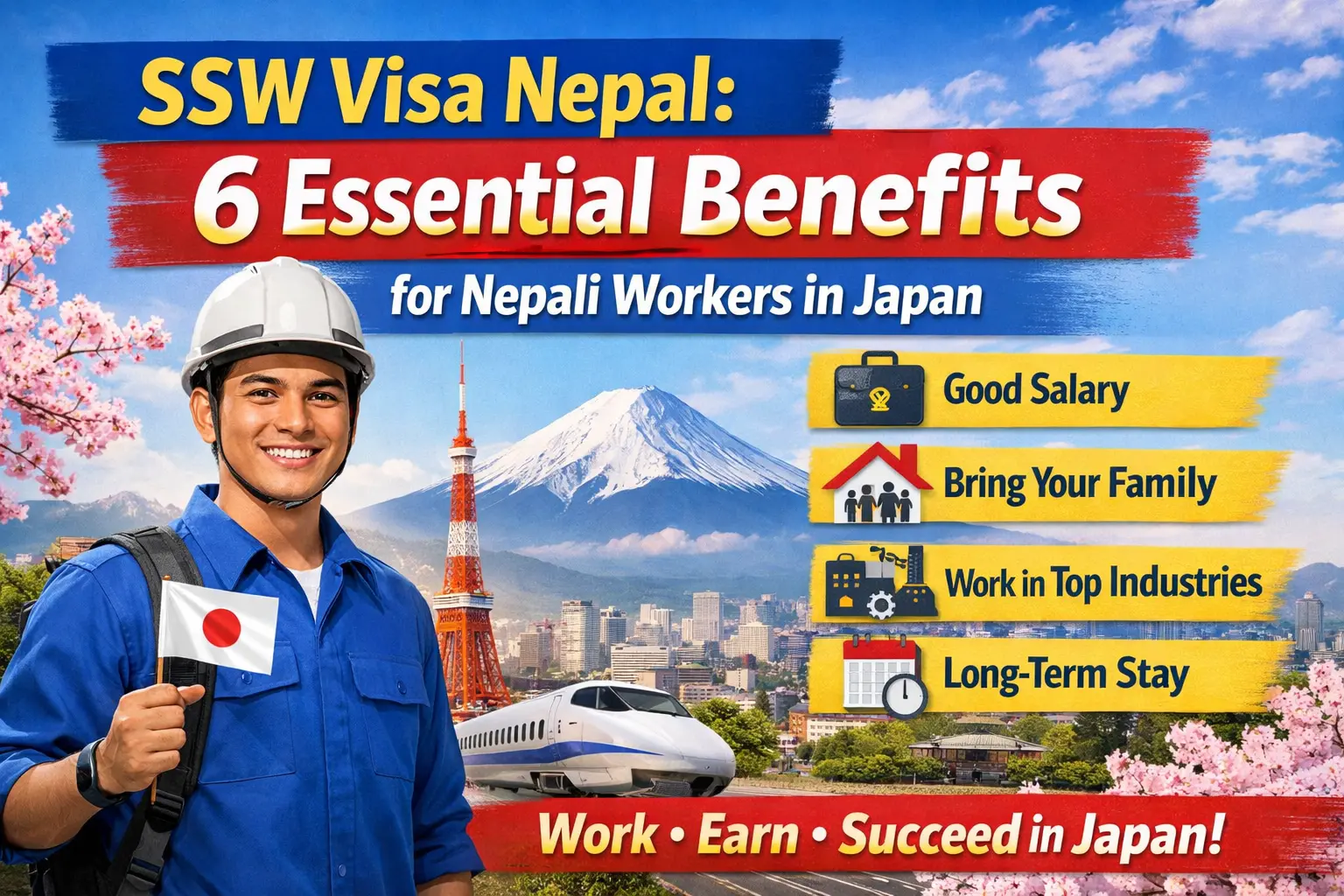
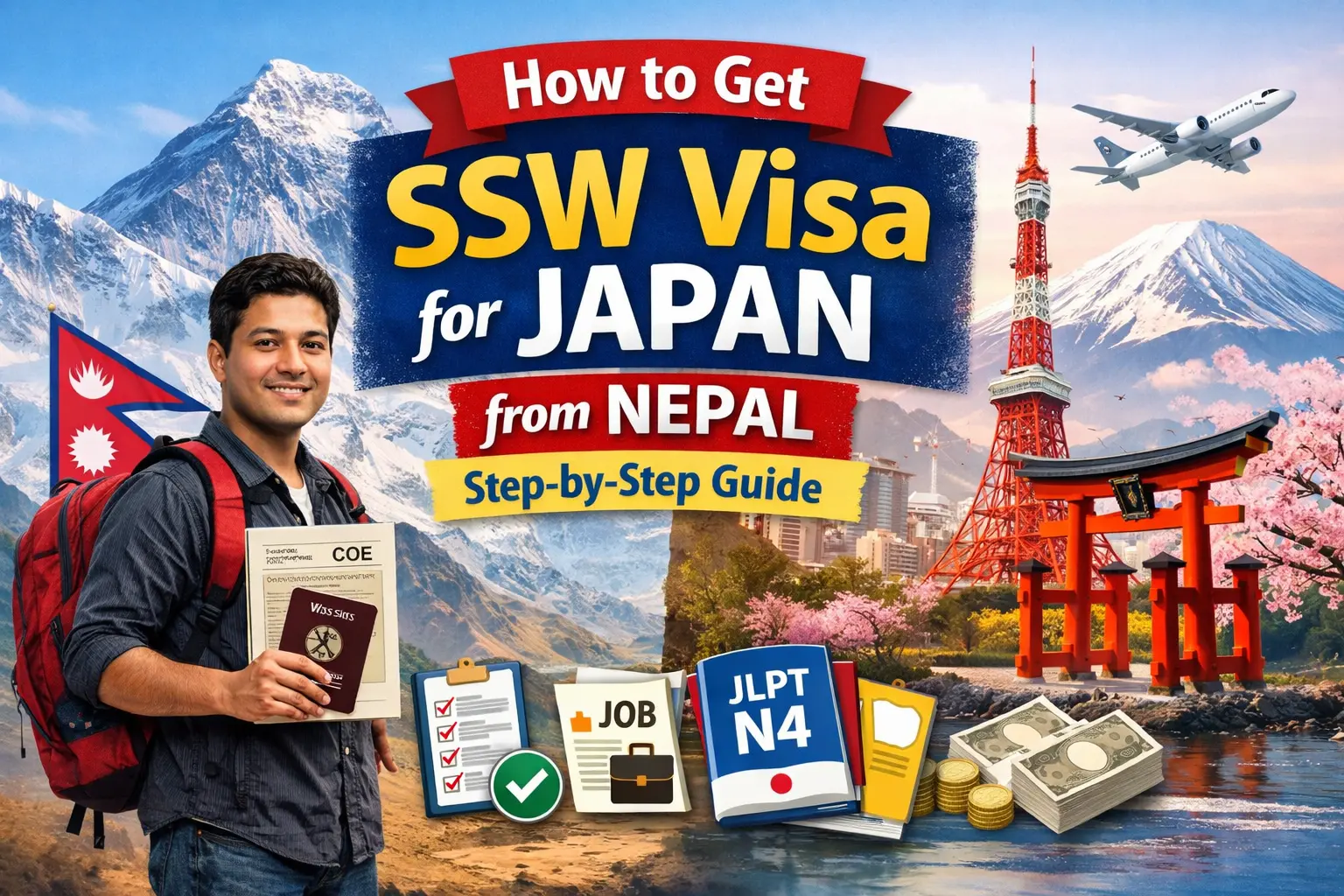
Japan’s Specified Skilled Worker (SSW) Visa, also known as SSW Visa Nepal for Nepali applicants, is a special work permit that allows foreign workers to legally work in Japan and help fill labor shortages in industries like caregiving, construction, manufacturing, and hospitality.
This visa provides stable employment opportunities and protection under Japanese labor laws. There are two types: Type 1, which is short-term and valid for up to five years, and Type 2, which is long-term, renewable, and allows workers to bring their families.
For many Nepali workers, the SSW Visa Nepal offers a clear path to work legally in Japan, earn competitive salaries, and gain valuable international experience.
“With Japan facing a shrinking workforce, skilled Nepali workers are in high demand. Industries such as caregiving, hospitality, construction, and manufacturing actively seek Nepalese employees because of their dedication, adaptability, and strong work ethic.
Many Japanese companies even recruit directly from Nepal through authorized agencies, making it easier for workers to find legal and well-paying jobs under the SSW Visa.”
For many Nepali workers, the SSW Visa Nepal offers a secure and well-paid pathway to work in Japan legally. Compared to alternatives like the Technical Intern Training Program (TITP), the SSW Visa provides Nepali workers in Japan with better salaries, safer working conditions, and protection under Japanese labor law.
In addition, the visa allows opportunities to extend one’s stay and, for SSW Type 2 holders, even bring family members, making it an ideal choice for job seekers looking for long-term growth and stability in Japan.
What Is the SSW Visa Nepal? (Quick Overview)
The Specified Skilled Worker (SSW) Visa Nepal is a Japanese work permit designed for foreign workers to fill labor gaps in industries like caregiving, construction, and manufacturing. It focuses on practical skills, allowing workers to legally live and work in Japan while enjoying the protection of Japanese labor laws.
Difference between SSW Type 1 and SSW Type 2
There are two types of SSW Visa Nepal. Type 1 is short-term, valid for up to five years, and is designed for workers in various industries without advanced skills. Type 2 is long-term, renewable, and available for workers with higher-level skills, allowing them to bring family members and enjoy more stability in Japan.
Industries covered under the SSW Visa Nepal program
The SSW Visa Nepal allows workers to join industries where Japan faces labor shortages. These include caregiving for the elderly, construction, manufacturing, hospitality, agriculture, and food service.
Each industry has specific skill requirements and tests that applicants must pass to qualify.
High Demand for Nepali Workers in Japan
Japan is facing a serious labor shortage due to its ageing population and declining birth rate. Many industries, including caregiving, construction, and manufacturing, cannot find enough local workers to meet demand, creating opportunities for skilled foreign workers.
Why Japanese employers prefer foreign skilled workers
Japanese employers value Nepali workers for their strong work ethic, reliability, and adaptability. Many companies actively recruit from Nepal, knowing that Nepali employees quickly adjust to the Japanese work culture and consistently perform well.
Sectors where Nepali workers are highly demanded
Nepali workers are in high demand across several industries in Japan. Key sectors include caregiving for the elderly, food service and hospitality, construction, and manufacturing. Other industries, such as agriculture and housekeeping, also actively recruit skilled Nepali workers under the SSW program.
Major Benefits of the SSW Visa Nepal for Nepali Workers
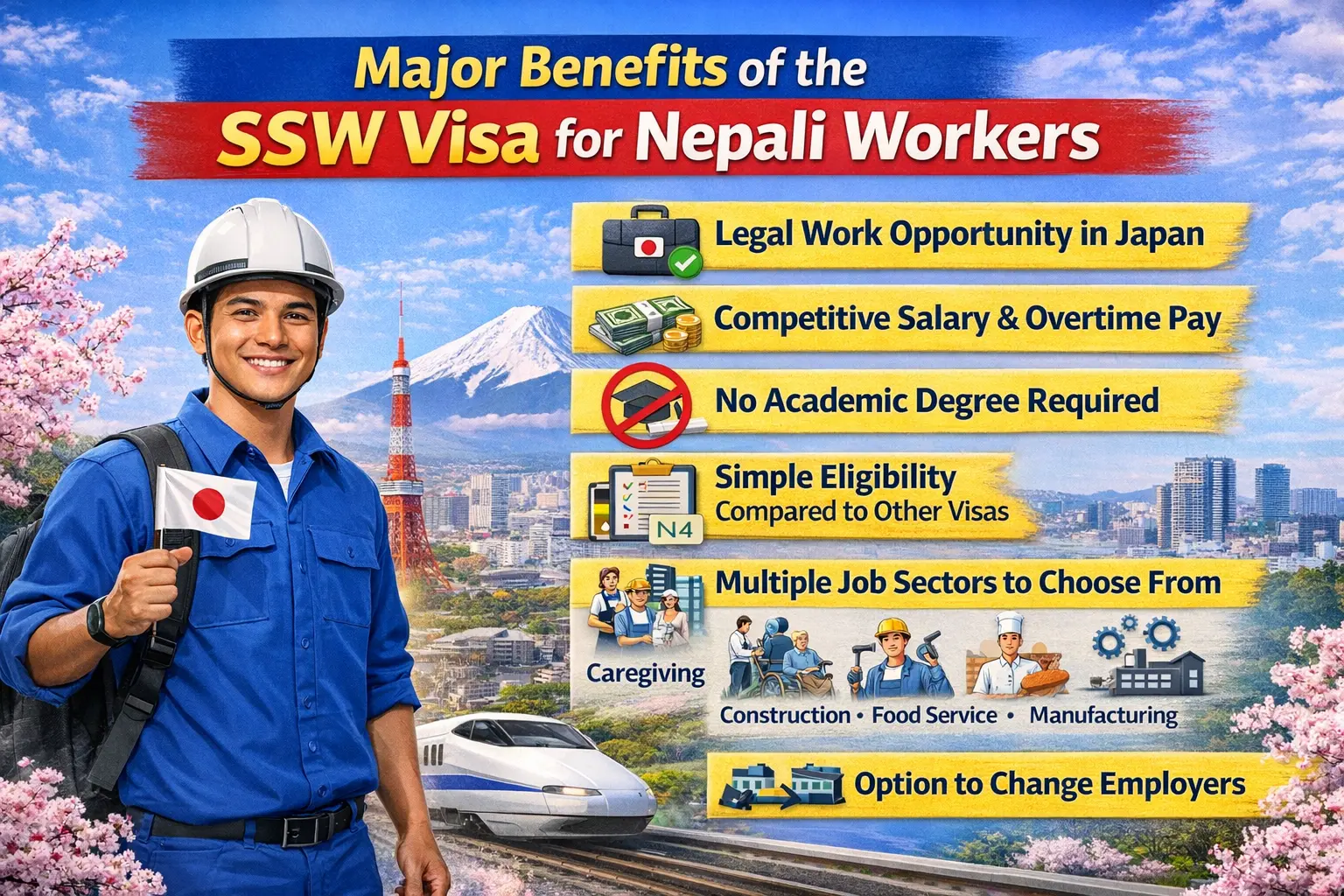
Legal Work Opportunity in Japan
The SSW Visa Nepal allows Nepali workers to work legally in Japan under government-approved contracts. Workers enjoy the protection of Japanese labor laws, ensuring fair treatment, safe working conditions, and rights similar to those of local employees.
Competitive Salary and Overtime Pay
Workers on the SSW Visa receive competitive salaries equal to those of Japanese employees in the same sector. In addition, they earn overtime, bonuses, and allowances, which provide a great opportunity to save money and send remittances to Nepal.
No Academic Degree Required
Unlike many work visas, the SSW Visa Nepal does not require an academic degree. It is a skills-based visa, making it ideal for workers who have practical experience and are ready to contribute their expertise in Japan.
Simple Eligibility Compared to Other Visas
The eligibility for the SSW Visa is simpler compared to other work visas. Applicants only need a basic level of Japanese (JLPT N4) and must pass a skills test, making it accessible for many Nepali workers.
Multiple Job Sectors to Choose From
The SSW Visa Nepal allows workers to choose from multiple industries where Japan faces labor shortages. This flexibility lets Nepali workers find jobs in caregiving, construction, food service, hospitality, and manufacturing according to their skills and interests.
Option to Change Employers
SSW Visa Nepal holders can change employers within the same industry, offering more freedom and job security. This ensures that workers can find positions that suit their skills and career goals.
Pathway to Long-Term Stay (SSW Type 2)
For workers who qualify for SSW Type 2, the visa provides a pathway to long-term stay in Japan. It allows extensions beyond five years, opportunities to bring family members, and long-term career growth in various industries.
Benefits of SSW Visa Nepal vs Other Japan Work Visas
SSW vs Technical Intern Training Program (TITP)
Compared to the Technical Intern Training Program (TITP), the SSW Visa offers Nepali workers better salary, legal protection, and job stability. While TITP focuses on training, often with lower pay and limited rights, the SSW Visa provides full labor law protection, opportunities to change employers within the same industry, and long-term career growth.
For these reasons, the SSW Visa is becoming the preferred choice for skilled Nepali workers.
Why SSW offers better salary, rights, and stability
SSW Visa holders enjoy competitive salaries, legal protections under Japanese labor law, and more stable employment than TITP interns. These benefits make it easier for Nepali workers to save, plan for the future, and even bring their families to Japan.
Living and Working in Japan as an SSW Worker
Work culture and safety
Japanese work culture values punctuality, discipline, and respect for colleagues and supervisors. SSW Visa holders are protected under Japanese labor laws, ensuring safe working conditions and fair treatment. Workers can report any violations without fear, making Japan a secure place to work.
Accommodation and living standards
Many employers provide shared or private accommodations for SSW workers, often including utilities and basic furniture. Japan offers high living standards, with clean neighbourhoods, reliable public transportation, and easy access to essential services, making it comfortable for workers to live and settle in.
Support systems for foreign workers
SSW workers receive support from both their employers and local authorities. Orientation sessions, language assistance, and guidance on Japanese laws help new workers adjust smoothly. Additionally, Nepali community groups and agencies provide peer support, advice, and assistance in navigating daily life, making it easier to settle in Japan.
Challenges Nepali Workers Should Be Aware Of
Language barrier
One of the biggest challenges for Nepali workers in Japan is the language barrier. While basic Japanese (JLPT N4) is required for the SSW Visa, learning essential phrases and workplace vocabulary in advance can make daily life and work much easier.
Cultural adjustment
Adjusting to Japanese culture can take time. Punctuality, politeness, and respect for hierarchy are central to workplace etiquette. Learning about local customs and social norms can help Nepali workers adapt quickly and feel more comfortable.
Work discipline and expectations
Work discipline in Japan can be stricter than in Nepal. Employers expect workers to meet high standards, maintain attention to detail, and perform consistently. Understanding these expectations in advance helps Nepali workers succeed and earn the trust of their employers.
How to prepare in advance
Preparing in advance can make the transition much smoother. Nepali workers should study basic Japanese, familiarize themselves with Japanese work culture, and connect with Nepali communities in Japan for support. Being mentally ready for initial adjustments can make settling in faster and more comfortable.
How Nepali Workers Can Apply for the SSW Visa Nepal
Basic eligibility requirements
To apply for the SSW Visa Nepal, Nepali workers must meet certain eligibility criteria. Applicants should be physically fit, between 18 and 35 years old, and have basic Japanese language skills (JLPT N4 or equivalent). They must also have skills or work experience relevant to the industries approved under the SSW program and a clean criminal record.
Required tests and documents
Applicants must pass a skills test and a basic Japanese language test (JLPT N4) to qualify for the SSW Visa. They also need to prepare important documents, including a valid passport, educational certificates, work experience letters, health certificate, visa application form, and a contract from a Japanese employer.
Role of manpower agencies/consultancies
Many Nepali workers apply for the SSW Visa with the help of authorized manpower agencies or consultancies. These agencies guide applicants through eligibility checks, document preparation, and test registration. They also help workers find employers, secure contracts, and provide pre-departure training and language classes to ensure a smooth transition to Japan.
Why the SSW Visa Nepal Is a Smart Choice for Nepali Workers
Summary of key benefits
The SSW Visa offers Nepali workers numerous benefits, including legal employment under Japanese labor laws, competitive salaries with overtime and bonuses, and a skills-based eligibility system that does not require a university degree.
Workers can choose from multiple industries, change employers within their sector, and even enjoy long-term stay options with the opportunity to bring family members.
Why now is the best time to apply
With Japan experiencing a significant labor shortage, especially in caregiving, construction, and hospitality, now is an ideal time for Nepali workers to apply for the SSW Visa.
Japanese companies are actively recruiting foreign talent, giving skilled workers a chance to secure good job placements and contracts quickly.
Japan is a stable and respectful work destination
Japan is known for its safe and disciplined work environment, high living standards, and respect for workers. Foreign employees, including Nepali workers, are valued and protected under Japanese labor laws, making it a stable and trustworthy destination for long-term employment.
Conclusion
The SSW Visa Nepal provides Nepali workers with an excellent opportunity to grow professionally, earn a competitive salary, and secure their financial future. With long-term career prospects and legal protection under Japanese labor laws, this visa is a pathway to both personal and professional success.
Skilled Nepali workers are in high demand in Japan and have a strong reputation for dedication and adaptability. With proper preparation, language skills, and guidance, anyone can successfully start a rewarding career in Japan under the SSW Visa. If you are ready to explore opportunities in Japan, reach out to an authorized consultancy or manpower agency for guidance.
They can help you check eligibility, prepare documents, and start your journey toward a rewarding career on the SSW Visa.
Frequently Asked Questions (FAQ) – SSW Visa for Nepali Workers
What is the SSW Visa in Japan?
The Specified Skilled Worker (SSW) Visa is a Japanese work visa introduced in 2019 to address labor shortages in key industries. It allows skilled and semi-skilled foreign workers to legally live and work in Japan in sectors such as caregiving, construction, IT, food service, and agriculture.
There are two types of SSW Visa:
- SSW Type 1: Valid for up to 5 years, does not allow bringing family members, and is suitable for workers with basic skills.
- SSW Type 2: Long-term and renewable, allows family relocation, requires higher-level skills, and offers more employment rights and stability.
This visa provides a pathway for Nepali workers and other foreign professionals to gain valuable international work experience while contributing to Japan’s workforce.
Who can apply for the SSW Visa from Nepal?
Nepali citizens aged 18 or older with a clean criminal record can apply for the SSW Visa. Applicants must pass a Japanese language test (JLPT N4 or JFT-Basic) and a skills assessment for their chosen industry, such as caregiving, construction, or agriculture, to qualify for employment in Japan.
What is the difference between SSW Type 1 and Type 2?
- SSW Type 1: A short-term visa valid for up to 5 years, designed for workers with basic skills and JLPT N4-level Japanese. Family members cannot accompany the worker.
- SSW Type 2: A long-term, renewable visa for workers with advanced skills, allowing family members to join. It offers greater job stability and can be a pathway to permanent residency in Japan.
Which industries are eligible under the SSW program?
The SSW Visa covers 16 industries in Japan that are facing labor shortages, mainly in skilled and semi-skilled roles. Key sectors include:
- Caregiving / Elderly care
- Construction
- Manufacturing
- Food service / Hospitality
- Agriculture
- Housekeeping and cleaning services
These industries actively recruit foreign workers, including Nepali professionals, to meet Japan’s workforce needs.
Is an academic degree required to apply for the SSW Visa?
No, an academic degree is not required for the SSW Visa. This visa is skills-based, meaning applicants qualify based on practical experience and industry-specific skills, rather than formal education. Workers with hands-on experience in fields like caregiving, construction, or manufacturing can apply even without a university degree.


Leave a Reply