Introduction
Gijinkoku Visa vs Student Visa is one of the most common questions Nepali students and professionals have when planning to move to Japan for education or work. In recent years, Japan has become one of the most popular destinations for Nepali students and professionals seeking better career opportunities, higher income, and a stable future abroad. With its strong economy, advanced technology, and increasing demand for foreign workers, Japan offers promising prospects for those who are willing to study, work, and grow professionally. For more details on Japan’s visa types and work regulations, you can refer to the Official Japanese Immigration Services Agency website.
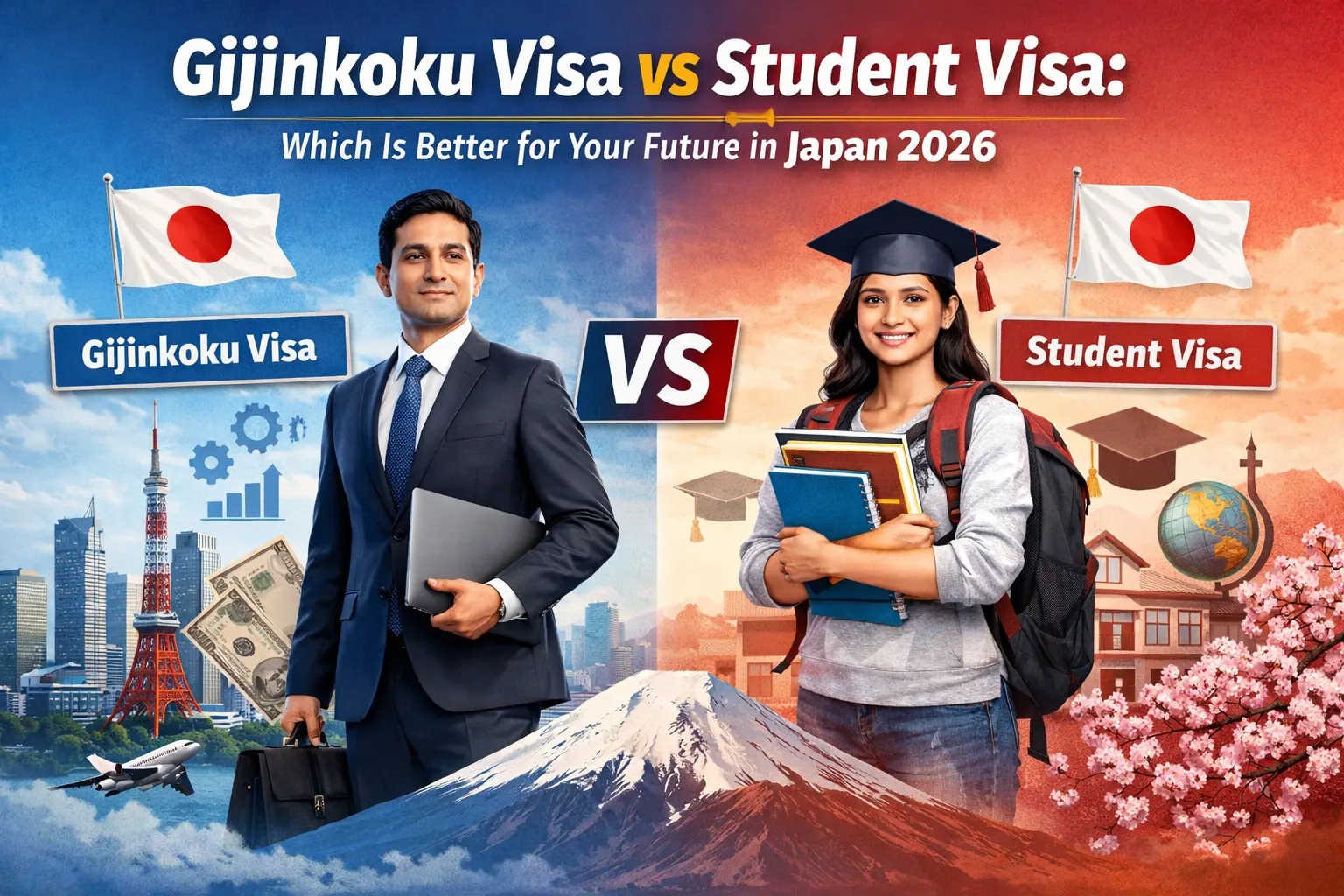
When planning to move to Japan, most Nepali applicants usually consider two main visa options: the Gijinkoku Visa vs Student Visa, also known as the Engineer/Specialist in Humanities/International Services work visa. While both pathways allow entry into Japan, they serve very different purposes and lead to very different long-term outcomes.
The purpose of this blog is to help you understand the key differences between the Gijinkoku Visa vs Student Visa, so you can choose the option that best matches your career goals, financial situation, and long-term plans in Japan. Making the right decision at the beginning can save you time, money, and unnecessary struggle in the future.
Overview of the Japan Student Visa | Gijinkoku Visa vs Student Visa
What Is a Student Visa?
A Japan Student Visa is issued to foreign nationals who are enrolled in recognized Japanese language schools, vocational institutions, colleges, or universities. This visa allows international students to stay in Japan for the primary purpose of education, whether it is learning the Japanese language or pursuing higher academic qualifications.
Key Features of the Japan Student Visa
- Study-focused visa: The main purpose of this visa is education, and students are expected to prioritize their studies.
- Limited work permission: Students can work part-time for up to 28 hours per week after obtaining official work permission from immigration.
- Short-term but renewable: Student visas are usually issued for 6 months to 2 years and can be renewed as long as the student continues their studies.
Who Is the Student Visa Best For?
The Japan Student Visa is best suited for:
- Fresh +2 graduates who want to continue their education or build a foundation in Japan
- Applicants without professional work experience who are not yet eligible for a work visa
- Individuals who want to learn the Japanese language first before entering the job market
Overview of Gijinkoku Visa vs Student Visa
What Is the Gijinkoku Visa?
The Gijinkoku Visa, officially known as the Engineer / Specialist in Humanities / International Services Visa, is a Japanese work visa designed for foreign professionals with specialized skills and academic qualifications. This visa allows overseas workers to be employed in professional roles that require technical knowledge, business expertise, or international experience.
Unlike a student visa, the Gijinkoku visa is issued for the purpose of full-time employment in Japan and is directly linked to a job offer from a Japanese company.
Key Features of Gijinkoku Visa
- Full-time professional work: Allows holders to work legally in skilled and professional positions related to their education or experience.
- Higher income and job stability: Gijinkoku visa holders earn professional-level salaries comparable to Japanese employees in similar roles.
- Long-term stay and career growth: This visa is renewable and provides strong opportunities for long-term employment, career advancement, and future residency in Japan.
Who Is the Gijinkoku Visa Best For?
The Gijinkoku Visa is best suited for:
- Bachelor’s degree holders or higher graduates in relevant fields
- Skilled professionals with work experience in engineering, IT, business, management, or international services
- Applicants who aim for long-term career development and settlement in Japan, rather than short-term study
Key Differences: Gijinkoku Visa vs Student Visa
Understanding the core differences in the Gijinkoku Visa vs Student Visa is essential before choosing the right pathway to Japan. While both visas allow a legal stay in Japan, they differ significantly in purpose, work rights, income potential, and long-term stability.
Purpose
The Student Visa is primarily issued for education. It is meant for individuals who want to study in Japan, including Japanese language courses or academic programs at colleges and universities.
The Gijinkoku Visa, on the other hand, is designed for professional employment. It allows foreign nationals to work full-time in skilled positions such as engineering, IT, business, and international services.
Work Rights
Student Visa holders are allowed to work part-time only, up to 28 hours per week, and must obtain special permission from immigration. Their main responsibility remains their studies.
Gijinkoku Visa holders are permitted to work full-time in their professional field without hourly restrictions, as long as the job matches their visa category.
Income Level
With a Student Visa, income is limited to what can be earned from part-time jobs, which is usually enough only to support basic living expenses.
In contrast, Gijinkoku Visa holders receive a professional salary based on industry standards. This provides better financial stability and the ability to save for the future.
Cost & Financial Burden
Students on a Student Visa must bear high tuition fees, along with accommodation and daily living costs in Japan. Financial pressure is common, especially in the initial period.
Gijinkoku Visa holders earn a regular salary, and in many cases, employers provide support such as housing assistance or transportation allowances, reducing financial stress.
Visa Duration & Stability
The Student Visa is generally short-term and study-based, requiring frequent renewals depending on the length of the course.
The Gijinkoku Visa is long-term and renewable, offering greater job security and a clearer pathway toward long-term residence in Japan.
Career Growth & Future Opportunities
When choosing between a Gijinkoku Visa vs Student Visa, it is important to think beyond simply entering Japan and consider how each option affects your long-term career growth and future opportunities.
Student Visa Pathway
The Student Visa pathway requires a longer and less certain route toward a professional career in Japan. Students must first complete their studies, whether at a language school, college, or university, before they can enter the full-time job market.
After graduation, applicants need to secure a job offer and then apply to change their visa status from student to work visa. This process depends heavily on factors such as Japanese language ability, academic performance, and market demand. Even after completing studies, there is no guarantee that a work visa will be approved, making this pathway less predictable for long-term career planning.
Gijinkoku Visa Pathway
The Gijinkoku Visa offers direct entry into the Japanese workforce. Since it is a professional work visa, applicants begin their careers immediately after arriving in Japan, gaining real-world experience from day one.
This pathway allows for faster career progression, professional skill development, and stable income. Over time, continuous employment under the Gijinkoku Visa creates a strong foundation for long-term settlement, including eligibility for dependent visas and future permanent residency in Japan.
Permanent Residency & Family Benefits
For many applicants, moving to Japan is not just about short-term study or work, but about building a stable and secure future. In this case, understanding how each visa affects permanent residency and family sponsorship is crucial.
Student Visa
A Student Visa does not provide family sponsorship benefits. Students are generally not allowed to bring their spouse or children to Japan under dependent visas.
In addition, time spent in Japan on a Student Visa is not strongly counted toward permanent residency eligibility. Since the visa is temporary and education-focused, it offers limited support for those aiming for long-term settlement in Japan.
Gijinkoku Visa
The Gijinkoku Visa offers clear advantages for long-term stability. Visa holders are eligible to sponsor their spouse and children under dependent visas, allowing families to live together in Japan.
Moreover, continuous employment under the Gijinkoku Visa creates a clear and recognized pathway toward permanent residency. With stable income, tax contributions, and legal residence, applicants are well-positioned to apply for permanent residency in the future.
Which Visa Is Better for You? | Gijinkoku Visa vs Student Visa
Choosing the right visa depends on your educational background, career readiness, and long-term goals in Japan. Here’s a simple guide to help you decide:
Choose Student Visa If:
- You do not yet have a bachelor’s degree or higher
- You want to focus on learning Japanese before entering the workforce
- You are not yet ready for full-time professional employment
The Student Visa is ideal for those who need to build language skills or academic qualifications before pursuing a career in Japan. However, keep in mind that this path requires additional steps to switch to a work visa later.
Choose Gijinkoku Visa If:
- You already hold a bachelor’s degree or higher in a relevant field
- You are looking for stable income and professional career growth from day one
- You are serious about long-term settlement in Japan, including the possibility of bringing your family and applying for permanent residency
The Gijinkoku Visa allows you to start your career immediately, offering a more direct route to professional development and a secure future in Japan.
Common Misconceptions About Gijinkoku Visa vs Student Visa
When planning to move to Japan, many applicants have misunderstandings about Student and Gijinkoku visas. Let’s clarify some of the most common myths:
1. “Student Visa is the easiest way to settle in Japan”
While a Student Visa may allow entry into Japan, it is not a direct path to long-term settlement. After graduation, students must secure a job and successfully switch to a work visa, which is not guaranteed. Planning your career path from the beginning is crucial.
2. “Japanese language is mandatory for Gijinkoku Visa”
Japanese language skills are helpful but not always mandatory. Many companies hire skilled professionals who can communicate in English, especially in IT, engineering, and international services. However, learning Japanese can significantly improve career growth and integration.
3. “Switching from a Student Visa to a Work Visa is guaranteed”
Changing from a Student Visa to a work visa depends on job availability, qualifications, and employer sponsorship. Not every student will automatically qualify, so relying solely on this switch can be risky. A direct Gijinkoku Visa is often more secure for immediate professional employment.
How Sitasmi Global Education Can Help
Navigating the Gijinkoku Visa vs Student Visa process in Japan can be complex, but Sitasmi Global Education provides comprehensive support to make your journey smooth, efficient, and successful. Our services guide you from the very first consultation all the way to your arrival in Japan.
Free Eligibility Assessment
We start by evaluating your education, skills, and career goals to determine which visa pathway — Student or Gijinkoku — best suits your profile. This ensures you take the most effective route for long-term success.
Career Counselling Based on Your Profile
Our experienced counsellors provide personalized guidance to help you choose the right job sector and company in Japan. We consider your qualifications, interests, and long-term career plans to maximize your opportunities.
Job Placement Support for Gijinkoku Visa
For professionals aiming to work in Japan, we connect you with trusted Japanese employers looking for skilled international talent. From job matching to interview preparation, we help you secure the right position before you even leave Nepal.
End-to-End Visa Documentation & COE Assistance
Visa applications can be challenging, especially when submitting documents for the Certificate of Eligibility (COE). We provide step-by-step support, ensuring that all paperwork is accurate, complete, and submitted on time, giving you the highest chance of approval.
Final Conclusion
Choosing the right visa is a critical step for anyone planning to move to Japan. Comparing the Gijinkoku Visa vs Student Visa helps you understand which option is best: the Student Visa is ideal for those focusing on language learning or further studies, while the Gijinkoku Visa offers a direct pathway to professional employment, stable income, and long-term settlement.
When making your decision, it’s important to think about your long-term goals rather than shortcuts. Consider your education, career readiness, and plans for family or permanent residency. The right choice now can save time, effort, and uncertainty in the future.
At Sitasmi Global Education, we are dedicated to helping Nepali professionals and students navigate the Gijinkoku Visa vs Student Visa options with confidence. From eligibility assessments to job placement, visa documentation, and COE assistance, we provide end-to-end support to make your journey to Japan smooth, efficient, and successful.
Take the first step toward your future in Japan today! Contact us for a free consultation and let our experts guide you toward the visa and career pathway that suits you best.
📍 Baneshwor‑10, Kathmandu, Nepal
📞 +977‑9841507600 / +977‑1‑4522600
✉️ sitasmiglobal21@gmail.com
What is a Gijinkoku Visa?
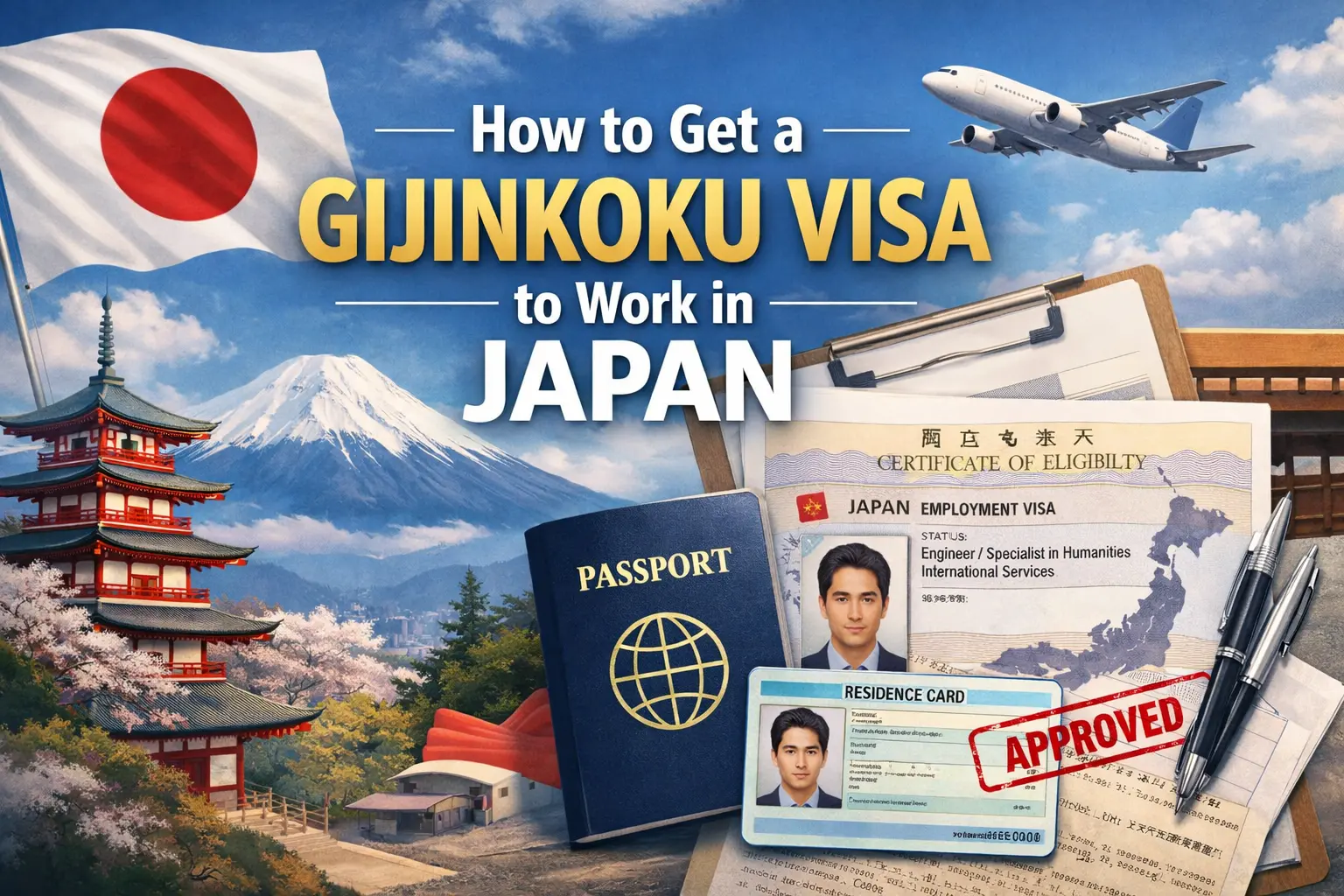
The Gijinkoku Visa (技術・人文知識・国際業務) is a long-term Japanese work visa designed for skilled foreign professionals in fields such as engineering, IT, business, and international services. This visa allows qualified individuals to live and work in Japan while contributing their expertise to Japanese companies.
To be eligible, applicants must typically have:
A bachelor’s degree or higher in a relevant field,
Or a vocational school certification,
Or 10+ years of professional experience in a specialized area.
The Gijinkoku Visa enables professionals to take on full-time office, technical, or specialized roles, earn a competitive salary, and build a long-term career in Japan. It also opens pathways for bringing family members and eventually applying for permanent residency, making it a preferred choice for individuals serious about long-term professional and personal growth in Japan.
Who is Eligible for the Gijinkoku Visa?
The Gijinkoku Visa (Engineer/Specialist in Humanities/International Services) is designed for foreign professionals with specialized skills who wish to work in Japan. To qualify, applicants must typically meet the following criteria:
Education: A bachelor’s degree or higher in a relevant field, or a recognized vocational school certification from a Japanese or accredited institution.
Professional Experience: In some cases, candidates with 10 or more years of relevant work experience in a specialized area may also be eligible.
Employment Offer: Applicants must have a full-time job offer from a Japanese company in their field of expertise, such as IT, engineering, business, marketing, or translation.
Salary Requirement: The offered salary should be comparable to or higher than that of a Japanese national in a similar role, ensuring fair compensation.
This visa is ideal for professionals seeking stable, long-term employment in Japan, with opportunities for career growth, family sponsorship, and eventual permanent residency.
Can I Bring My Family with the Gijinkoku Visa?
Yes, Gijinkoku Visa holders can bring their spouse and children to Japan under a Dependent Visa. As the primary visa holder, you will act as their sponsor and must demonstrate that you have sufficient income and financial stability to support your family while living in Japan.
This benefit makes the Gijinkoku Visa an excellent choice for professionals who want to relocate with their family, enjoy long-term stability, and build a future together in Japan.
Do I need to know Japanese to get a Gijinkoku Visa?
No, Japanese language proficiency is not strictly required to obtain a Gijinkoku Visa (Engineer/Specialist in Humanities/International Services). The primary requirements focus on your educational qualifications, specialized skills, and a valid job offer from a Japanese company.
That said, knowing Japanese can be highly advantageous, as it improves workplace communication, integration into Japanese companies, and opportunities for career growth. Many international roles, especially in IT, engineering, and global business, may allow English or other languages as the working language.
How is a Gijinkoku Visa Different from a Student Visa? | Gijinkoku Visa vs Student Visa
The Gijinkoku Visa (Engineer/Specialist in Humanities/International Services) is a long-term work visa designed for skilled professionals who have a university degree, vocational qualification, or relevant work experience. It allows holders to work full-time in specialized fields, receive a professional salary, and build a long-term career in Japan.
In contrast, a Student Visa is intended for those who wish to study at Japanese educational institutions, such as language schools, colleges, or universities. Student Visa holders are allowed limited part-time work and cannot sponsor family members. Additionally, time spent on a Student Visa does not strongly contribute toward eligibility for permanent residency.
In short, the Gijinkoku Visa is career- and settlement-focused, while the Student Visa is education-focused, making them suitable for different goals and stages of planning your future in Japan.

Leave a Reply